
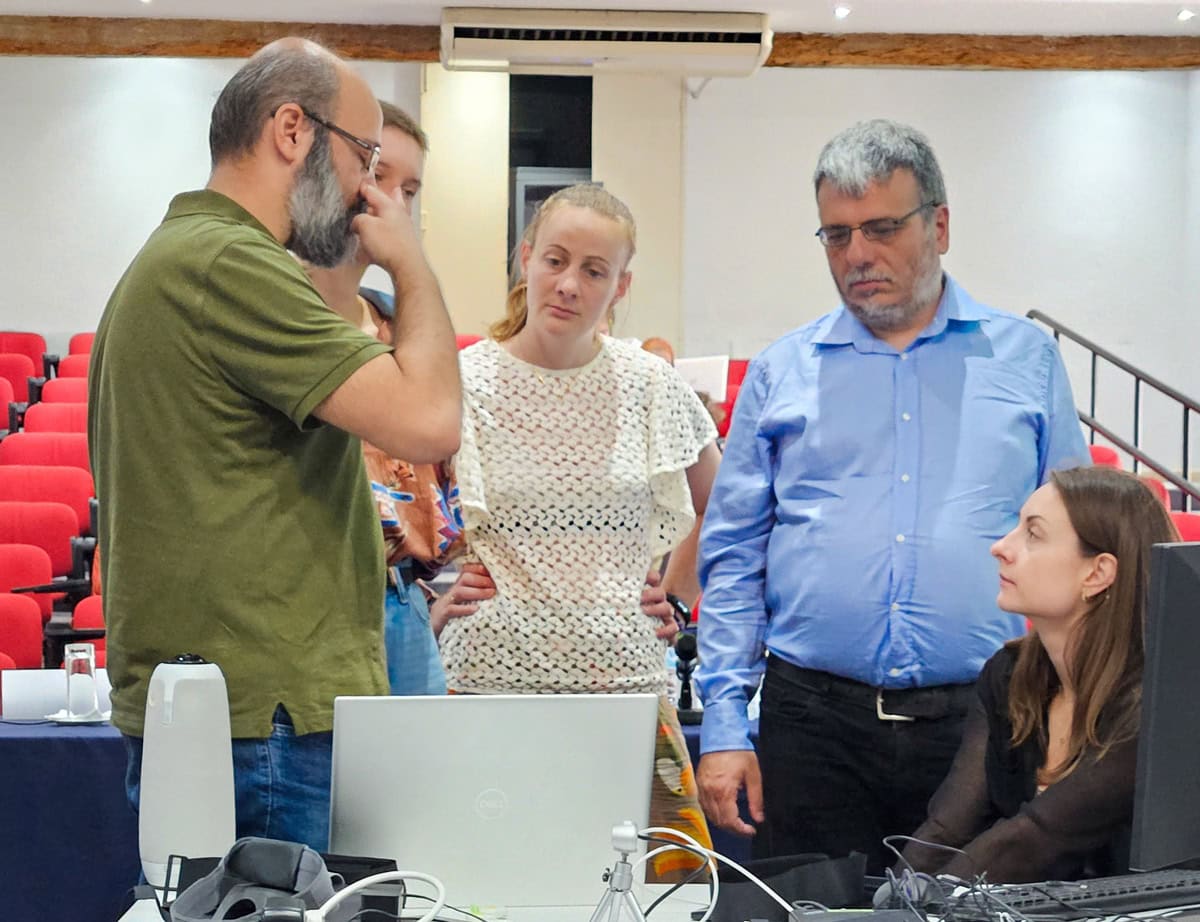
The TeleRehaB DSS project is advancing towards a major milestone: the launch of a multi-national, multi-centre clinical trial. This study will evaluate the safety, feasibility and clinical impact of an AI-supported Decision Support System designed to deliver personalised balance rehabilitation for individuals at risk of falling addressing a major public health challenge affecting millions of people worldwide.
Falls are the leading cause of emergency department visits among people over 65, and their health and economic burden is projected to rise significantly across Europe and beyond. TeleRehaB seeks to tackle this challenge by offering accessible, digital solutions to support evidence-based care in both clinical and home settings.
Building on Strong Foundations
Before launching the full trial, the consortium undertook several critical activities to ensure scientific, clinical and technical readiness. Since October 2023, clinical sites have been involved in three major strands of work:
- Focus groups with patients and clinicians to co-develop recruitment materials and refine exercise protocols.
- Validation studies of components such as the wellness mat, the eHealth Literacy tool (eHEALS, incorporating STAM-14 and MDPQ), and inertial measurement unit (IMU) scoring models.
- In-clinic pilot testing, now active at all clinical sites, to assess safety, usability and real-world applicability.
These activities have helped refine the TeleRehaB DSS platform and contributed to ongoing improvements based on patient and clinician feedback. Preliminary findings from focus groups highlighted the need for clear, accessible language in recruitment materials and better support for individuals with fatigue or digital barriers. Validation studies demonstrated good feasibility and reliability of the IMU-based scoring model and confirmed usability of the wellness mat and digital tools.
A Structured and Inclusive Trial
The randomised controlled trial (RCT), starting in July 2025, will enrol 460 participants across the United Kingdom, Greece, Thailand, Portugal and Germany. Eligible participants must be aged 40–80, live independently, and have a diagnosis of one of the following: stroke, mild cognitive impairment (MCI), vestibular disorder or long COVID-19. They must be able to walk 500 metres (with or without assistance), use a digital device, and provide informed consent.
The trial consists of a 9-week home-based balance rehabilitation programme delivered via a virtual coach, mobile app and wearable sensors, with support from trained clinicians. The programme includes personalised physical exercises, cognitive training and gamified elements to increase engagement.
Trial Arms and Oversight
Participants will be randomly assigned to one of three arms:
- High-tech intervention: Full TeleRehaB DSS including virtual coaching, wearables and app
- Low-tech intervention: A simplified version with fewer digital components
- Control group: A standardised home exercise programme (e.g. OTAGO or Meniere’s Society materials)
Weekly phone check-ins and clinician-led reviews at weeks 3 and 6 will monitor symptoms, adherence and technical issues. Progression through exercises will be determined based on participant readiness and clinician judgement, particularly relevant for patients managing fluctuating symptoms (e.g. long COVID-19).
What Lies Ahead
All clinical sites have completed platform installation, staff training and translation of materials. The technical components(mobile application, dashboard and literacy assessment tools) have reached deployment readiness through iterative development.
TeleRehaB’s trial marks the beginning of a new model for digital rehabilitation: personalised, decentralised and globally coordinated. Its foundation reflects a shared ambition to provide effective, equitable care across borders and clinical contexts.
